Are Mechanical engineers naturally bad at engineering maths? This common myth in 2026 needs to be dispelled now!

Mathematics is a game played according to certain simple rules with meaningless marks on paper. – David Hilbert
Think you’re bad at engineering maths?
Really engineering maths?? Let me put this blunt…No, but times have changed and engineers needing to do long division or multiplication by hand is a thing of a past (so are engineers rules which is a shame). Instead we employee the use of models and calculators that are embedded within the software we use to calculate the information we need, from CAD/CAM to MathCAD to Excel.
My journey.
To use myself as an example, I finished secondary school with a D in Maths, and I was an average student, however I must admit it was great sitting in the Maths class in year 9 and getting a free past on the hours lessons if we could get the teacher (Mr Willcox) reminiscing and tell us a story of himself in WW2 (we had a lot of free time during those lessons).
After school I did take the academic route through college and university to eventually earn my degree in Mechanical and Manufacturing engineering, and trust me there was plenty of advance level maths in there that I had to learn and pass exams for.
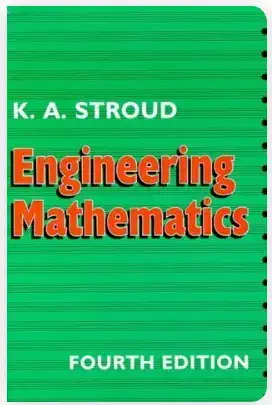
I still have those maths books today: Advanced Engineering Mathematics by K.A Stroud, while I haven’t ever revisited them it’s only because the field of engineering I went into was more for Statistics as a Production engineer.
Maths for engineers.
But the truth is that most school level maths is what I’ve used heavily in my career, whenever I’m working out a problem or designing a new tool/jig, I’m using Trig or geometry. If the problem is harder than Algebra pops up, but like I mentioned above today’s software have the tools to help solve an engineers need for maths on top of that if I need a formula for heat transfer or to work out how much force I need to overcome to drive a dowel into an interference fit on an assembly to select the correct toggle press then there are calculators on sites out there dedicated for it.
Is that making the engineer DUMB? No, why? Because if you follow the maths (and more sites show the workings) you can learn how to do it yourself, or built your own calculator for that specific job in Excel using some coding or formulas, these days its more about time saving and being more productive.
So, bad at Maths? Ok then you can learn, maths is logical and so long as you have the right method then the answer pops up and making sure you check and get a colleague to check also reinforces that knowledge and learning.
How I improve and develop my engineering Maths skills.
I prefer to learn the maths, either via YouTube and Sites with their own calculators or just gives you the formulas, then I like to build my own calculator in Excel to prove I’ve understood the variables, over time this has created for me a one-stop shop for my Manufacturing engineering maths!
That’s great for the engineering maths formulas that I use daily, but for general school level maths to practise methods, logic and abstract reasoning, then I turn to my trusty 20 year old Maths refresher book that I work through roughly every 6 months, here’s a link to the post I wrote about it.
Aside from that, yes I do use Brilliant to test myself and relearn other maths that my book doesn’t cover which also has the benefit of giving me updated methods for solving the older topics with ease (both in understanding and working through the method).
Examples of Great Engineers and Scientist needing help with Maths.
- Even Einstein had to get help with his greatest contributions as he himself focus more on conceptual physics.
- Michael Faraday
- Alexander Graham Bell
- Thomas Edison
- Charles Darwin
What maths should you focus on for Mechanical / Manufacturing engineering?
- Trigonometry
- Algebra
- Calculus
- Simple formulas for working out geometry like area, volume for different shapes
- Statistics
What resources are there to help?
- Brilliant.org
- Refresher Maths books like this one (https://stuartjbateman.com/what-is-a-good-book-on-mathematic-fundamentals/)
- https://www.youtube.com/@ProfessorLeonard
- Coursera.org
- Mathigon.org
Why you should practise engineering maths?
Practising daily without a method isn’t the best idea, this is rote learning, what you should be doing is testing yourself via questions that then use space repetition to help you bed in and use memory recall over time, the book ‘How to Learn‘ and ‘Make it Stick‘ cover this method and others to help, so check them out or a good summary from other sites.
But honestly, if we don’t practise the basics, we lose the ability to quickly spot errors, understand what’s happening in our calculations, and think through problems logically. Regular practice keeps your mathematical intuition sharp and helps you recognise patterns faster when you’re working through engineering challenges.
What other engineers say and how do they resolve this problem?
- Key areas to focus on include trigonometric functions, basic calculus (derivatives and integrals), and later vectors, matrices, natural logarithms, and Euler’s number. Using external learning resources, such as online lecture series, can be very helpful throughout these topics.
- Mathematics should be seen as a toolbox, used only as needed, with a solid understanding of trigonometry, geometry, and basic differential calculus being sufficient for most cases.
- struggling with maths does not define your ability as a student or engineer, and steady effort is what ultimately leads to success.
- Maths often becomes easier when it is applied to real engineering problems. Subjects such as fluid dynamics and heat transfer, despite being mathematically intensive, can be more intuitive and engaging once the maths is linked to physical processes. Everyone has different strengths, and while extra effort in maths may be required, other areas of engineering may become personal strengths. The overall message is one of confidence, persistence, and encouragement.
- Have a mathematical understanding so that you’re able to verify that the results today’s new software’s gives you is correct, if they don’t then you’ve inputted an error.
Software that you can learn to use to help with engineering problems
- Matlab
- Any CAD package that offers FEA
- Python
- Excel VBA
- Julia
- GNU Octave
Question: I’m not good at engineering Maths, should I still become an Engineer?
Yes, maths is a toolbox and a way of logical thinking that engineers need to use and practise in order to find then develop solutions, having a mathematical mind allows you to see patterns and understand what the data is telling you, to view the variables and to dismiss the nonsense.
Resources – Internal Engineering Projects
Every engineer needs the best start in their career, and even if you’re a seasoned professional, continuous learning remains essential. Here’s a curated list of my engineering project posts designed for students and engineers at any stage who want to expand their skill set. Whether you’re looking to improve your practical experience, develop existing abilities, master new techniques, or simply tackle an exciting challenge, these projects offer something valuable for everyone in the engineering community.
Exciting Personal Project ideas for Mechanical Engineering Students to Tackle Year-Round
Discover eight hands-on project ideas that help mechanical engineering students build practical skills year-round, from 3D printing and CAD design to welding, coding, and Formula Student racing. Each project develops real-world engineering capabilities while keeping you engaged and continuously learning outside the classroom.
Top 6 3D Mechanical Engineering Projects to Develop Your Skills and Knowledge Now
Explore six practical 3D printing projects that teach essential mechanical engineering skills including compliant mechanisms, cam design, tolerance control, and Design for Manufacture and Assembly (DFMA). Each project offers hands-on learning opportunities to develop your CAD skills, understand material behaviour, and master reverse engineering—all from your home workshop.


What are your thoughts? Have I covered everything or is there more you know and would like to share?
I’m always learning and improving this site and my blogs, so please feel free to get in touch with me via LinkedIn or this site to discuss any topics I have covered.
If you’re having trouble finding ways to progress check out these sites filled with free learning tools:


Discover more from The Chartered Engineer
Subscribe to get the latest posts sent to your email.
