The 5 factors to consider for Change management
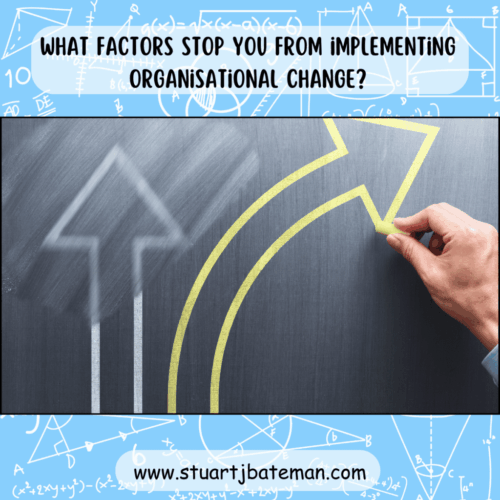
Whenever someone feels under attack, excuses are easy to find- Visual Factory
My thoughts on Change Management
In a recent encounter, the idea of change management was brought to my attention after I found myself dealing with an individual who seemed unable to slow down in pursuit of their objectives, constantly pushing for immediate results without allowing for the necessary time for processes to unfold.
This experience served as a poignant reminder that regardless of the size or stature of the organization one works for, the pace of change is often deliberate and influenced by various factors:
- Workers: The willingness and readiness of employees to embrace change play a significant role in its pace and success. Resistance or reluctance among staff can hinder the momentum of any proposed changes.
- Management: The leadership’s vision, commitment, and ability to effectively communicate the need for change are crucial determinants of its speed and effectiveness. Without strong and supportive leadership, initiatives may falter or stall.
- Ethos: The prevailing culture and values within an organization greatly impact its receptiveness to change. Cultures that prioritize innovation, adaptability, and continuous improvement tend to adapt more readily to change compared to those resistant to deviation from the status quo.
- Economic Situation: External economic factors, such as market conditions, industry trends, and financial stability, can either catalyze or impede organizational change efforts. Economic downturns may necessitate swift and decisive action, while periods of growth may allow for more measured adjustments.
- Ignorance: Lack of awareness or understanding about the need for change can significantly hinder progress. Education and communication efforts are essential to ensuring that all stakeholders are informed and aligned with the proposed changes.
Insights
Reflecting on these dynamics for Change management, I recalled insights from John Kotter’s seminal work, “Leading Change.” Kotter emphasizes the importance of fostering a sense of urgency within organizations, driven not by personal agendas but by a collective recognition of the business imperatives that impact everyone’s livelihoods, particularly income generation.
In essence, sustainable change requires both urgency and a dedicated change agent committed to aligning organizational efforts with overarching goals and objectives.
External Lean – Resources
Want to learn more about Lean, then check out these 5 Lean organisation websites that I highly recommend:
Lean Smarts – LeanSmarts.com offers an online training academy designed to support lean manufacturing transformations through engaging video-based courses and certification programs Leanuk. The platform provides ready-to-use training materials with facilitator guides, covering topics like 5S, waste elimination, one-piece flow, pull systems, and visual management based on the Toyota Production System Leanuk. Organizations can deliver training through personal certification, facilitator-led sessions, their own training platform with up to 250 users, or integrate content into existing Learning Management Systems Leanuk.
Lean Academy – LeanUK.org (Lean Enterprise Academy) is a not-for-profit organization that helps individuals and organizations become self-reliant in lean thinking and practice through research, teaching, and coaching Leanuk. They conduct action research to develop learning materials and processes, deliver capability development through their online Lean Learning Platform and workshops, and share findings through events like the UK Lean Summit Leanuk. Founded by lean pioneer Dan Jones, they’ve been involved in developing and spreading lean thinking in the UK for over 40 years across industries including automotive, healthcare, government, and services Leanuk.
CI Tool kit – CIToolkit.com provides professionals, teams, and students with practical tools, methods, and resources for implementing continuous improvement and achieving operational excellence citoolkit. The site features libraries of downloadable infographics, team exercises and games for Lean and Six Sigma workshops, visual illustrations of concepts, and step-by-step how-to guides. It also offers digital products including training materials, templates, and worksheets designed to support continuous improvement journeys citoolkit.
iSixSigma – iSixSigma is a comprehensive online resource dedicated to Lean Six Sigma methodologies and continuous improvement practices isixsigma. The platform offers articles, case studies, and certification guides covering topics like Six Sigma, Lean manufacturing, Kaizen, and Business Process Management. It serves practitioners from beginners to experts seeking to reduce defects, improve efficiency, and drive business results through data-driven process improvement isixsigma.
Lean Production – LeanProduction.com is a free educational resource focused on lean manufacturing techniques and eliminating waste from production processes leanproduction. The site provides easy-to-understand guides on topics like 5S, TPM, OEE, and SMED, helping manufacturers improve efficiency, reduce costs, and increase productivity leanproduction. Brought to you by Vorne, it offers practical tools, templates, and resources designed to be quickly implemented by manufacturing teams looking to achieve measurable improvements in their operations.



What are your thoughts? Have I covered everything or is there more you know and would like to share?
I’m always learning and improving this site and my blogs, so please feel free to get in touch with me via LinkedIn or this site to discuss any topics I have covered.
If you’re having trouble finding ways to progress check out these sites filled with free learning tools:


Discover more from The Chartered Engineer
Subscribe to get the latest posts sent to your email.
